Best Infrared Saunas for Home Use (2026)
Infrared saunas use light waves to heat your body directly rather than the surrounding air, making them effective at lower temperatures (120–150°F vs 170–200°F for traditional saunas). This makes them more accessible, more energy-efficient, and easier to install. Look for low EMF carbon heaters, full-spectrum capability, and solid wood construction.
Key Buying Factors
- ✓Check EMF/ELF ratings — under 3 mG is considered low
- ✓Full-spectrum (near, mid, far) offers the most therapeutic benefit
- ✓Carbon heaters provide more even coverage than ceramic
- ✓120V models plug into standard outlets; 240V models need electrician
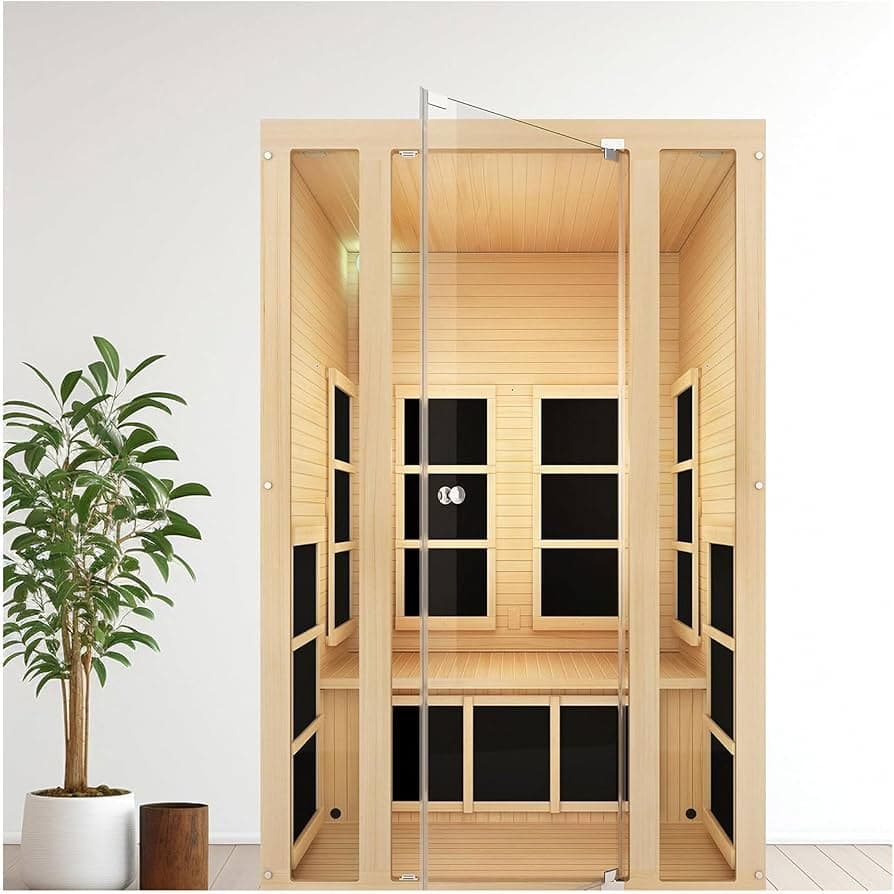
JNH Lifestyles Joyous 2 Person
A best-selling 2-person far-infrared sauna with 7 carbon-fiber heaters in a Canadian Hemlock cabin.
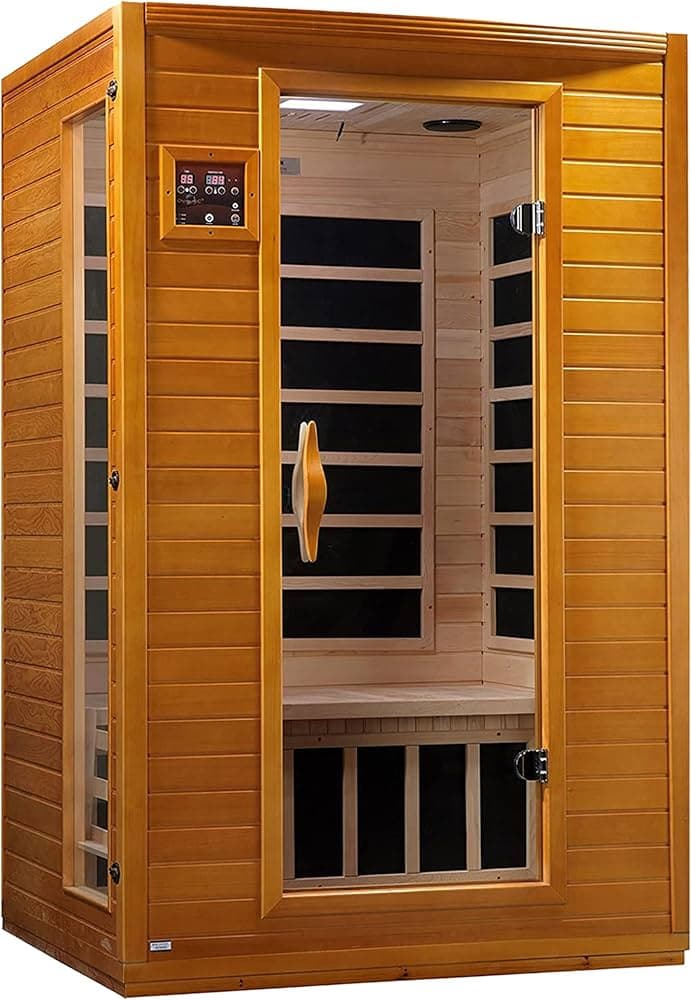
Dynamic Saunas Andora 2 Person
2-person far-infrared sauna with 6 low-EMF carbon panels, red-light therapy, and Bluetooth speakers.
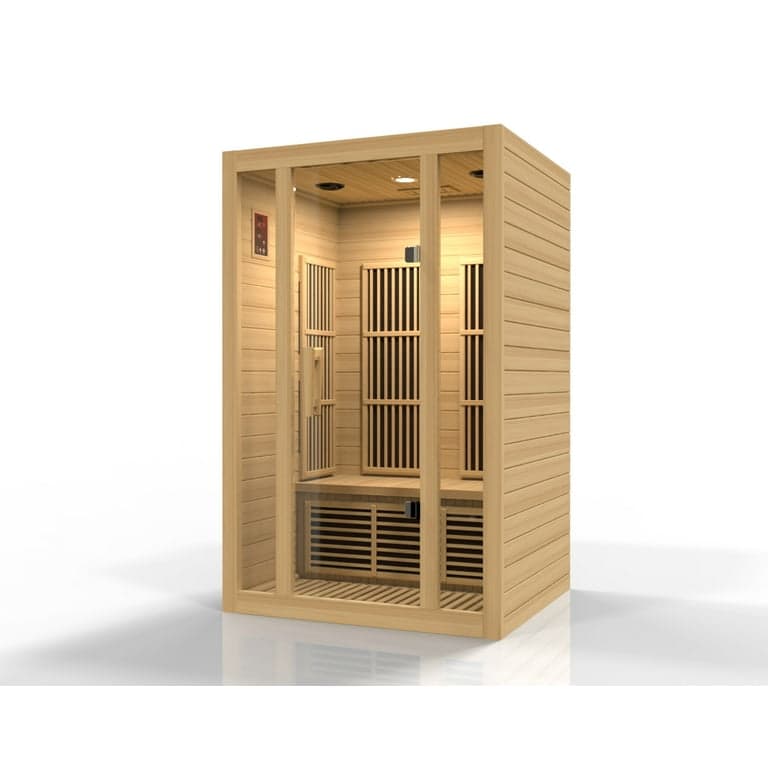
Maxxus Seattle Carbon 2 Person
2-person far-infrared sauna (model MX-J206-01) with 6 carbon panels, including a reflexology foot heater.
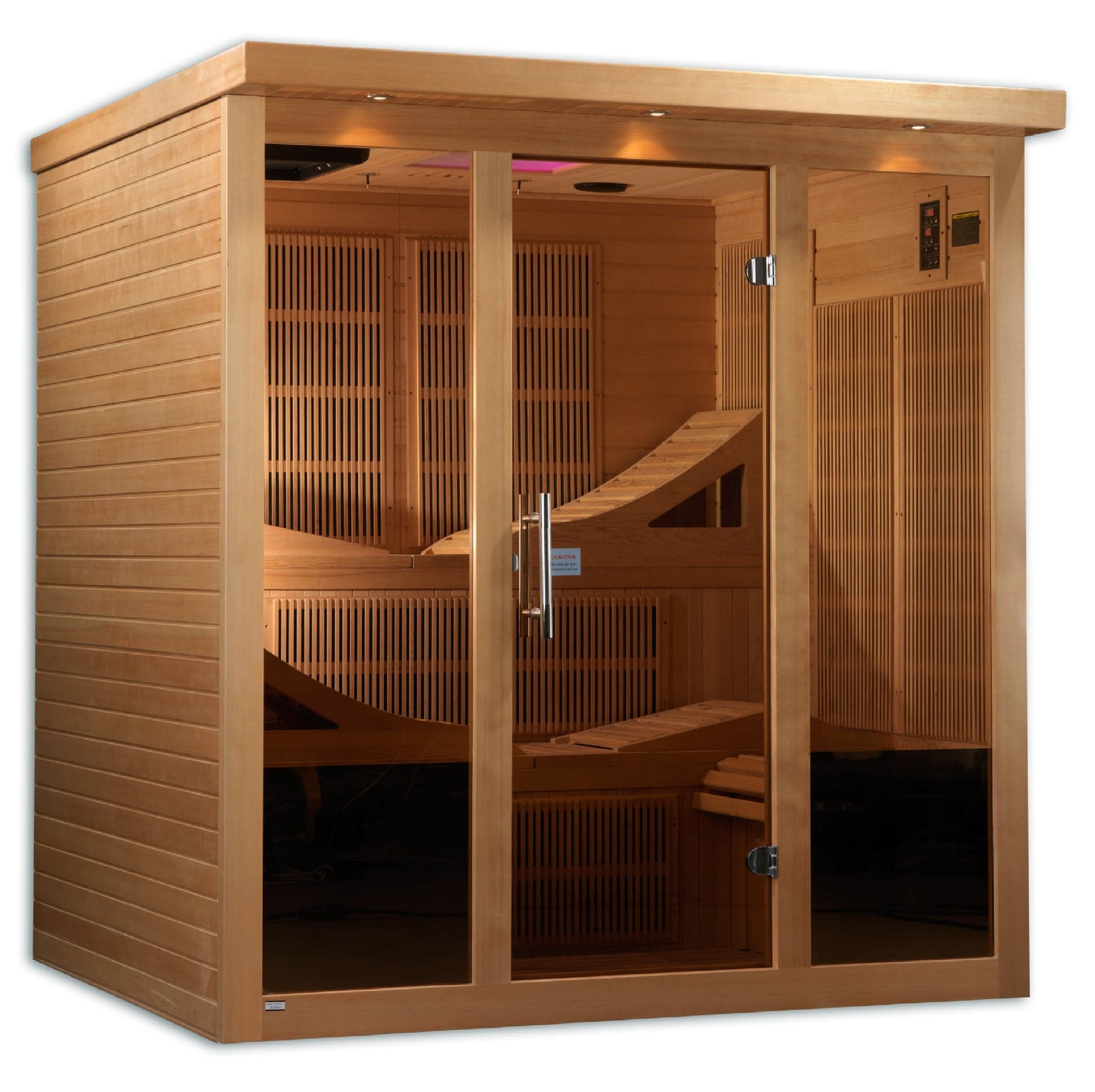
Golden Designs Monaco 6 Person
Spacious 6-person ultra-low-EMF far-infrared sauna in double-paneled Canadian Hemlock.

Sun Home Saunas Luminar Outdoor 2-Person Full-Spectrum Infrared Sauna
Premium 2-person outdoor full-spectrum infrared sauna in Canadian red cedar with panoramic black glass and app control.

Sun Home Saunas Equinox 2-Person Full-Spectrum Infrared Sauna
2-person indoor full-spectrum infrared sauna in eucalyptus wood with a large, strong owner review base.

Sun Home Saunas Solstice 2-Person Infrared Sauna
2-person indoor far-infrared sauna in eucalyptus wood — Sun Home's signature line, with a lifetime warranty.

Sun Home Saunas Solstice 1-Person Infrared Sauna
Compact 1-person far-infrared sauna in eucalyptus — Sun Home's single-person signature model with a lifetime warranty.

Sun Home Saunas Solstice 3-Person Infrared Sauna
Premium 3-person indoor far-infrared sauna from Sun Home in Eucalyptus, with smart controls and a lifetime warranty.

Sun Home Saunas Solstice 4-Person Infrared Sauna
Premium 4-person indoor far-infrared sauna from Sun Home in Eucalyptus, with smart controls and a lifetime warranty.

Sun Home Saunas Equinox 3-Person Full-Spectrum Infrared Sauna
Premium 3-person indoor full-spectrum sauna from Sun Home in Eucalyptus, with smart controls and a lifetime warranty.
Sun Home Saunas Eclipse 2-Person Red Light & Infrared Sauna
Premium 2-person indoor red-light + infrared sauna from Sun Home in Eucalyptus, with smart controls and a lifetime warranty.
Sun Home Saunas Eclipse 4-Person Red Light & Infrared Sauna
Premium 4-person indoor red-light + infrared sauna from Sun Home in Eucalyptus, with smart controls and a lifetime warranty.

Sun Home Saunas Pod 1-Person Red Light & Infrared Sauna
Premium 1-person indoor red-light + infrared sauna from Sun Home in Eucalyptus, with smart controls and a lifetime warranty.

Sun Home Saunas Luminar Outdoor 5-Person Full-Spectrum Infrared Sauna
Premium 5-person outdoor full-spectrum sauna from Sun Home in Canadian Red Cedar with panoramic glass and app control.
What to Know Before You Buy
Infrared cabins are the easiest home saunas to live with: most 1–2 person models plug into a standard 120V outlet, heat up in 10–15 minutes, and cost only a few dollars a week to run. The things that separate a good one from a cheap one are heater type (carbon panels give more even heat than ceramic), EMF engineering, and wood quality.
Frequently Asked Questions
Do infrared saunas need special wiring?
Most 1–2 person infrared cabins run on a standard 120V household outlet. Larger 3–4 person and full-spectrum units often need a dedicated 120V or 240V circuit — always check the listing's electrical spec before buying.
What EMF level is considered safe in an infrared sauna?
The ICNIRP safety threshold is 2,000 mG, but quality saunas today test well under 3 mG. Premium brands market ultra-low EMF under 1 mG. See our low-EMF guide for what the numbers mean.
How hot do infrared saunas get?
Typically 120–150°F — lower than a traditional sauna because infrared heats your body directly rather than the air, so you still sweat heavily at a more tolerable temperature.