Sauna vs Hot Tub: Which Should You Buy?
Sauna vs hot tub compared — heat experience, benefits, purchase and running cost, maintenance, space, and who each one suits.
Two Very Different Heat Experiences
A sauna and a hot tub both promise relaxation, but they work in opposite ways. A sauna surrounds you with dry or radiant heat in the air, while a hot tub immerses you in warm, churning water. Choosing between them comes down to the experience you want, the space you have, and how much upkeep you are willing to take on.
The Experience Compared
A sauna delivers intense, enveloping heat that encourages a deep sweat. Traditional Finnish saunas run roughly 150-195F and let you pour water on hot stones (loyly) for bursts of steam, while infrared cabins stay gentler at around 120-150F and heat your body directly. A hot tub sits much cooler, typically near 100-104F, offering buoyancy and massaging jets rather than a sweat session.
- Sauna: dry or radiant high heat, vigorous sweating, quiet and meditative
- Hot tub: warm water immersion, jets, buoyancy that takes weight off joints
Claimed Benefits
Both are associated with relaxation and stress relief. Sauna use is associated with cardiovascular relaxation and post-exercise recovery in observational research. Warm-water immersion is associated with muscle relaxation and easier movement for some people, since buoyancy reduces joint loading. These are general associations rather than guarantees, and individual results vary.
Purchase and Running Cost
All figures here are rough estimates that change often and vary by region, model, and energy prices. Treat them only as ballpark guidance.
- Up-front: portable and small infrared saunas tend to be the lowest cost, traditional cabins and hot tubs typically cost more
- Running cost: a sauna only draws power while heating for a session, while a hot tub usually keeps a large volume of water hot continuously, which can add up
Maintenance and Space
This is where the two diverge most. A sauna mainly needs wiping down and occasional ventilation. A hot tub holds standing water, so it requires ongoing water chemistry management, filter cleaning, and periodic draining and refilling. Saunas range from tiny one-person cabins to outdoor builds, while hot tubs need a reinforced, level base and drainage planning.
Who Each Suits
If you want a low-maintenance heat ritual and a strong sweat, a sauna is the simpler choice. If you prefer soaking, socializing in water, and gentle joint relief, a hot tub may fit better. If a sauna wins, compare our picks for the best infrared saunas and the best traditional saunas to narrow it down.
Top-Rated Saunas
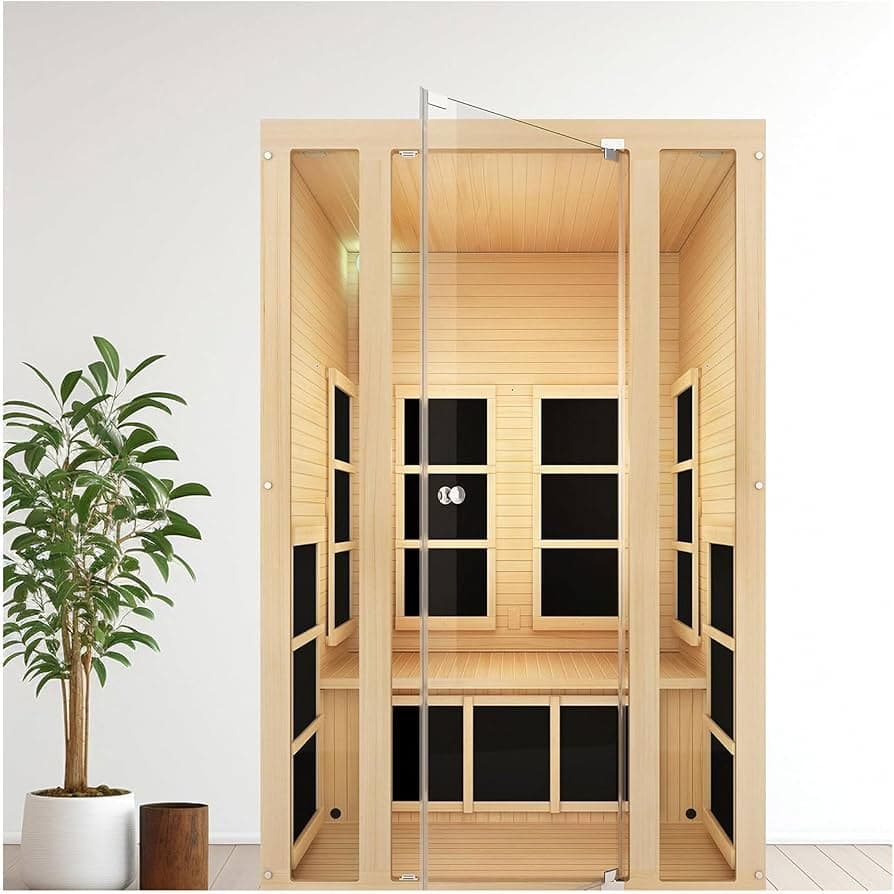
JNH Lifestyles Joyous 2 Person
A best-selling 2-person far-infrared sauna with 7 carbon-fiber heaters in a Canadian Hemlock cabin.
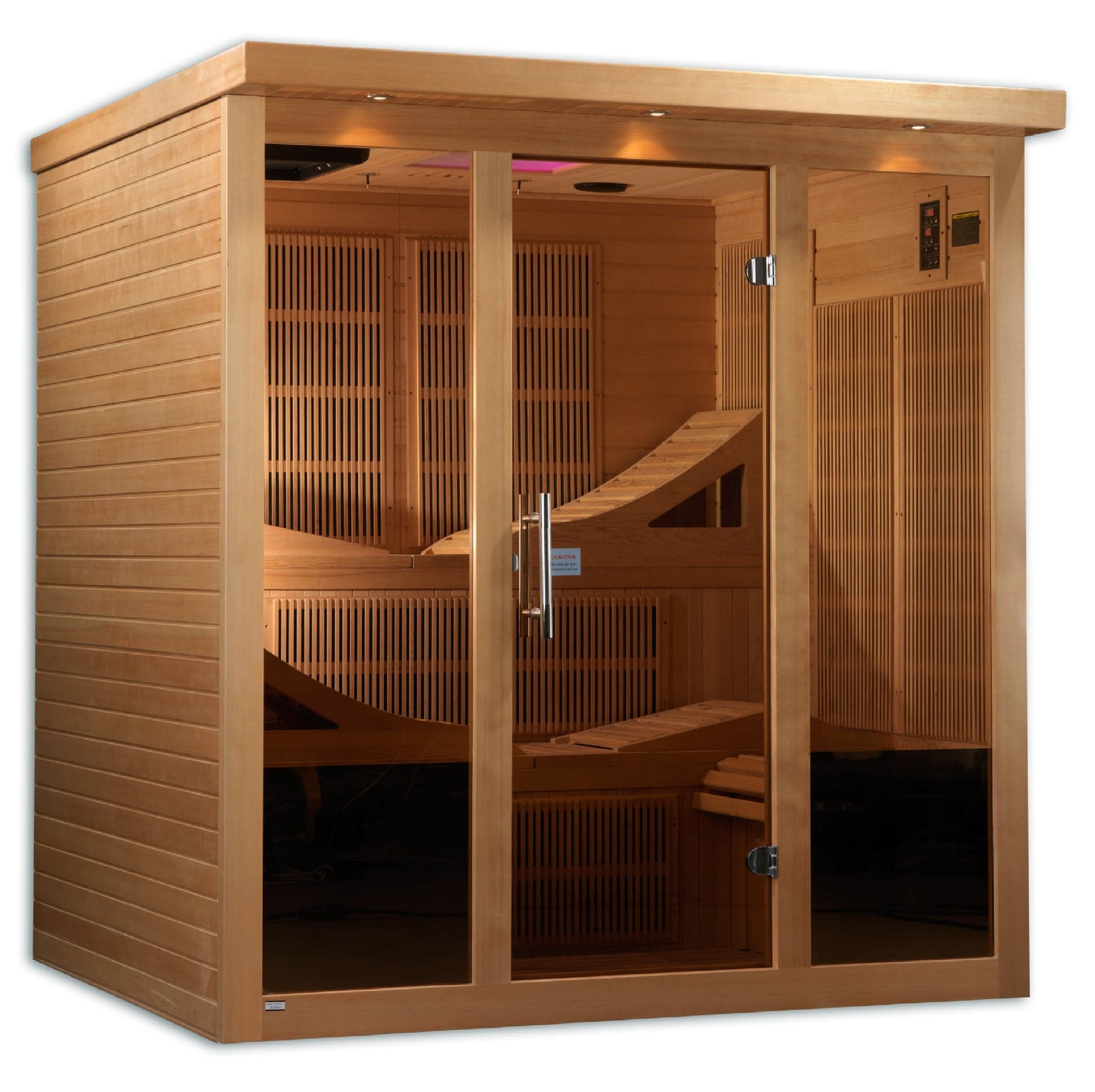
Golden Designs Monaco 6 Person
Spacious 6-person ultra-low-EMF far-infrared sauna in double-paneled Canadian Hemlock.