Saunas and Longevity: What the Research Suggests
The Finnish cohort research on sauna frequency and mortality, what it does and doesn't prove, and how to use a sauna for long-term health.
The Research Everyone Cites
The most-referenced work is a 2015 JAMA Internal Medicine study of 2,315 Finnish men followed for around 20 years. Compared with once-weekly users, men who used a traditional sauna 4–7 times per week had substantially lower rates of fatal cardiovascular events and all-cause mortality (reported via Harvard Health as roughly 49% / 38% / 31% mortality across 1× / 2–3× / 4–7× weekly use).
What It Does — and Doesn't — Prove
This is an observational study showing an association, not proof that saunas cause longer life. A JAMA editorial noted the relationship may not be causal — frequent sauna users may simply be healthier or have more leisure time. It also studied traditional Finnish saunas in men, so applying it directly to infrared saunas or other populations is a stretch.
Plausible Mechanisms
- Repeated cardiovascular "exercise-like" stress that may improve vascular function
- Lower blood pressure and reduced arterial stiffness with regular use
- Stress reduction and improved relaxation
How to Use a Sauna for Long-Term Health
- Consistency beats intensity — regular moderate sessions, not occasional marathons.
- Stay hydrated and listen to your body.
- Treat the sauna as a complement to exercise, sleep, and diet — not a replacement.
- Clear it with your doctor first if you have heart concerns or are pregnant.
The honest takeaway: regular sauna use is associated with encouraging longevity signals, the practice is low-risk for most healthy adults, and it's worth doing for how it makes you feel — just don't treat the association as a guarantee.
Top-Rated Saunas
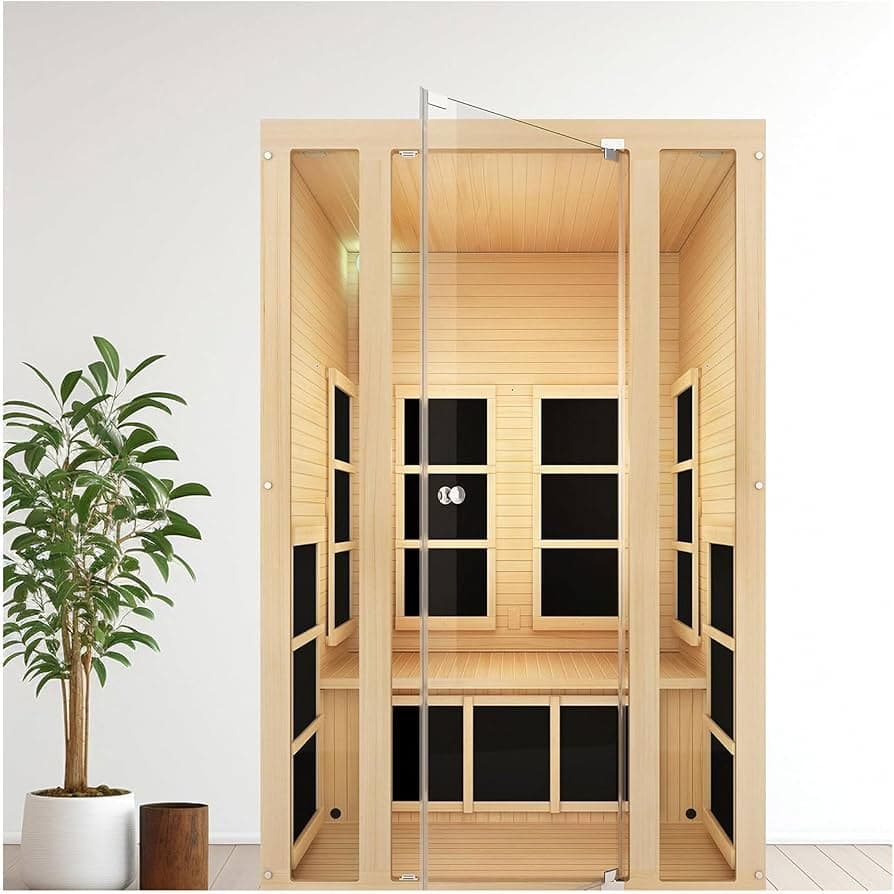
JNH Lifestyles Joyous 2 Person
A best-selling 2-person far-infrared sauna with 7 carbon-fiber heaters in a Canadian Hemlock cabin.

Golden Designs Monaco 6 Person
Spacious 6-person ultra-low-EMF far-infrared sauna in double-paneled Canadian Hemlock.