Do Saunas Need Special Wiring? 120V vs 240V Explained
Which saunas plug into a standard outlet and which need a dedicated 240V circuit — electrical requirements, costs, and what to check before you buy.
The Short Version
It depends on the sauna. Most small infrared saunas plug into a standard household outlet. Traditional saunas and larger units almost always need a dedicated 240V circuit installed by a licensed electrician.
120V — Standard Outlet (No Electrician)
Most 1–2 person infrared saunas run on a standard 120V / 15–20A outlet. Plug-and-play, no special wiring. One caution: don't share the circuit with other high-draw appliances, and avoid long extension cords (use the sauna's own cord into a dedicated wall outlet where possible).
240V — Dedicated Circuit (Electrician Required)
Electric traditional saunas and larger infrared cabins typically need a dedicated 240V circuit, often 30–60A depending on heater wattage. This requires a licensed electrician and usually a permit. Budget roughly $200–$600 for the work, more if the electrical panel is far from the sauna or needs upgrading.
How to Know Which You Need
- Check the manufacturer's electrical spec before buying — it states the exact voltage and amperage.
- Small 1–2 person infrared → usually 120V plug-in.
- 3+ person infrared, traditional, or barrel with an electric heater → usually 240V.
- Wood-burning heaters need no electrical supply, but require a flue/chimney.
Outdoor Saunas
Outdoor units need a weatherproof, outdoor-rated electrical run to the location, and many jurisdictions require a permit. Plan this before ordering — see our installation guide.
Don't Skip the Spec Check
The single most common surprise for new buyers is discovering their dream sauna needs 240V wiring. Confirm the requirement up front so the installation cost doesn't catch you off guard.
Top-Rated Saunas
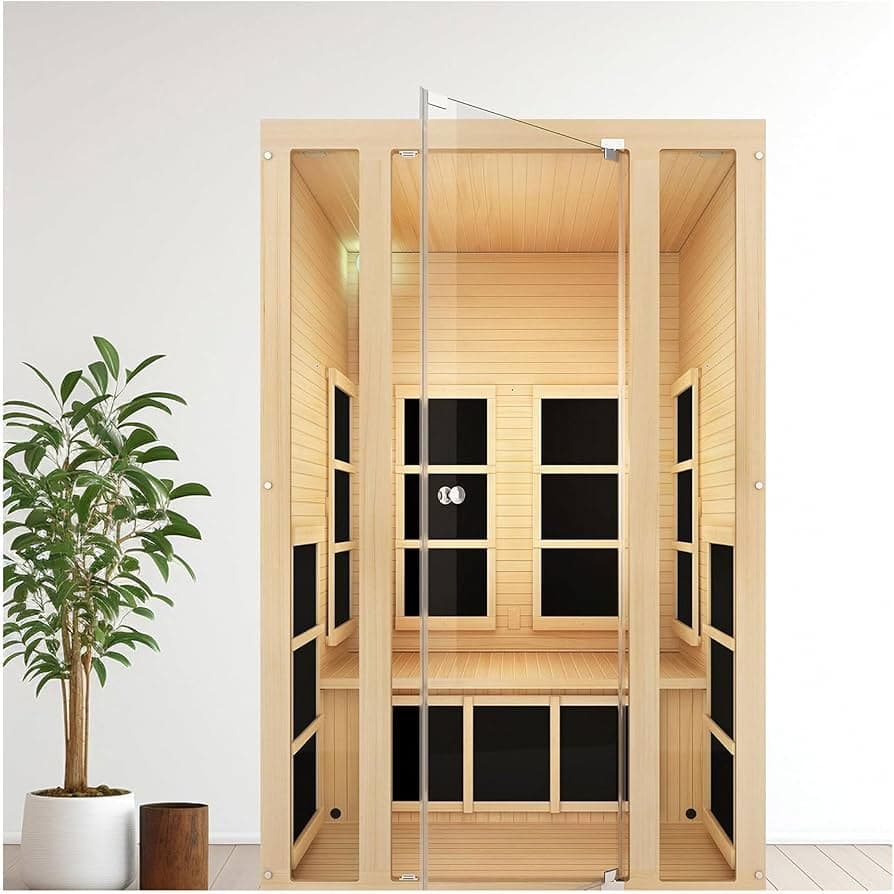
JNH Lifestyles Joyous 2 Person
A best-selling 2-person far-infrared sauna with 7 carbon-fiber heaters in a Canadian Hemlock cabin.
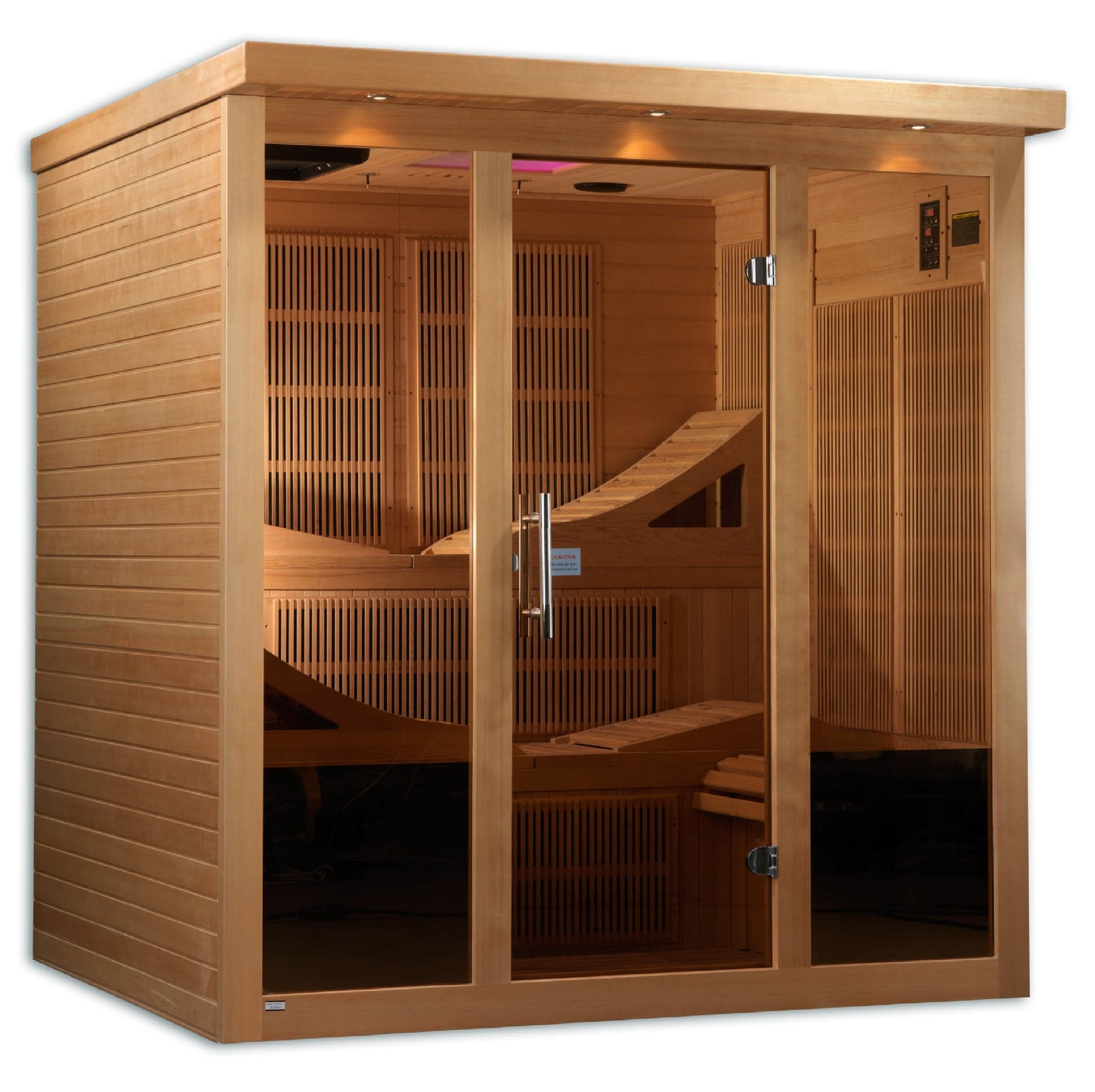
Golden Designs Monaco 6 Person
Spacious 6-person ultra-low-EMF far-infrared sauna in double-paneled Canadian Hemlock.