How to Build a Home Sauna: What to Know
Planning a DIY sauna — space, framing, insulation and the foil vapor barrier, interior wood, heater sizing, ventilation, electrical, and kit vs prefab.
Planning and Space
Start by deciding how many people you want to seat and where the room will go, whether a spare bathroom, basement corner, garage, or backyard. Allow enough height for an upper bench where the heat collects, and confirm the floor can handle moisture with a drain or sealed, sloped surface. For a fuller walkthrough, see our installation guide.
Framing
Most home saunas are framed with standard studs, leaving cavities for insulation and creating a solid base for the interior cladding. Plan stud spacing and blocking to support heavy bench framing and the heater guard rail, and rough in the door opening, which should swing outward for safety.
Insulation and the Vapor Barrier
Proper insulation lets the room heat quickly and hold temperature. The critical detail is a foil vapor barrier installed over the insulation, foil side facing the interior, with seams taped to reflect heat and block moisture from reaching the framing.
- Insulation: Fill stud cavities in walls and ceiling.
- Foil barrier: Overlap and tape seams to keep the assembly sealed.
Interior Wood and Benches
Clad walls and ceiling with a stable sauna wood such as cedar or hemlock, and build benches from a cool, resin-free species like basswood or aspen. Fasten bench boards with hidden or recessed fixings so no hot metal touches skin, and leave gaps for airflow and drainage.
Choosing a Heater and Ventilation
Size the heater to the exact cubic volume of the room; an undersized unit will struggle and an oversized one wastes energy. Ventilation is essential: an intake near the heater and an adjustable outlet on the opposite wall keep fresh air circulating and the experience comfortable.
Electrical
Wiring depends on the heater. Many small 1-2 person infrared units run on a standard 120V outlet, while traditional heaters and larger cabins need a dedicated 240V circuit installed by a licensed electrician, roughly a $200-$600 estimate that varies. Review whether your sauna needs special wiring before buying.
Scratch Build vs Kit vs Prefab
- DIY from scratch: Most flexible and potentially lowest material cost, but demands the most skill and time.
- Pre-cut kit: Pre-measured panels and wood you assemble, a middle path balancing cost and effort.
- Prefab cabin: Largely pre-built for the fastest setup at a higher price; see cost expectations, all as estimates that vary.
Top-Rated Saunas
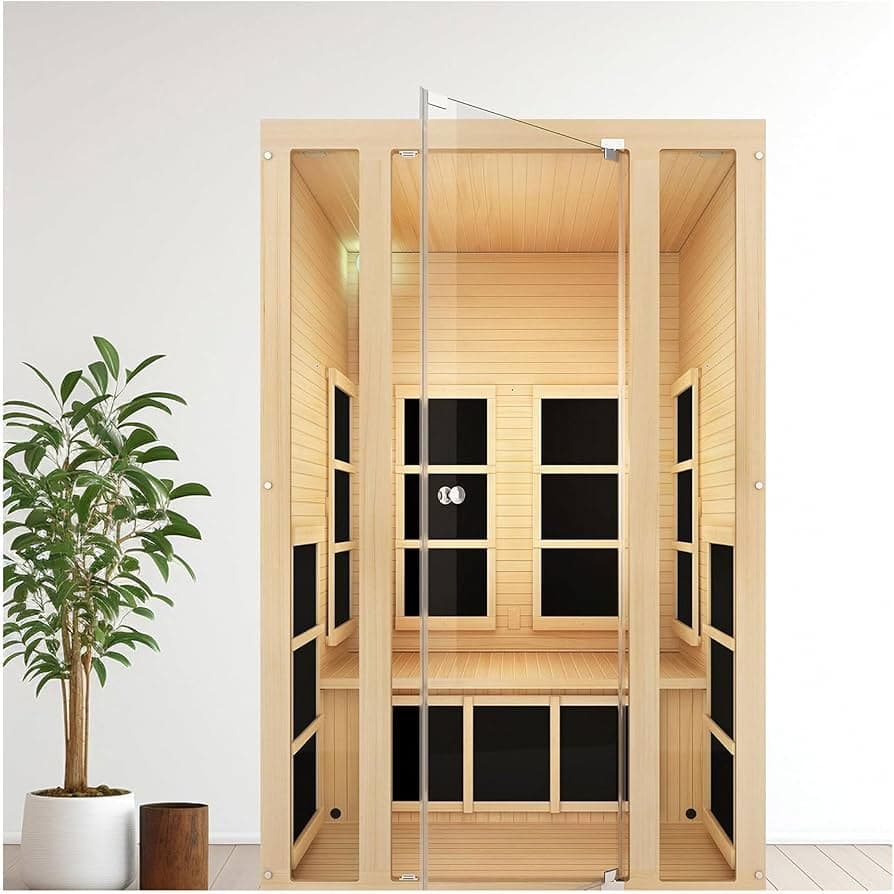
JNH Lifestyles Joyous 2 Person
A best-selling 2-person far-infrared sauna with 7 carbon-fiber heaters in a Canadian Hemlock cabin.
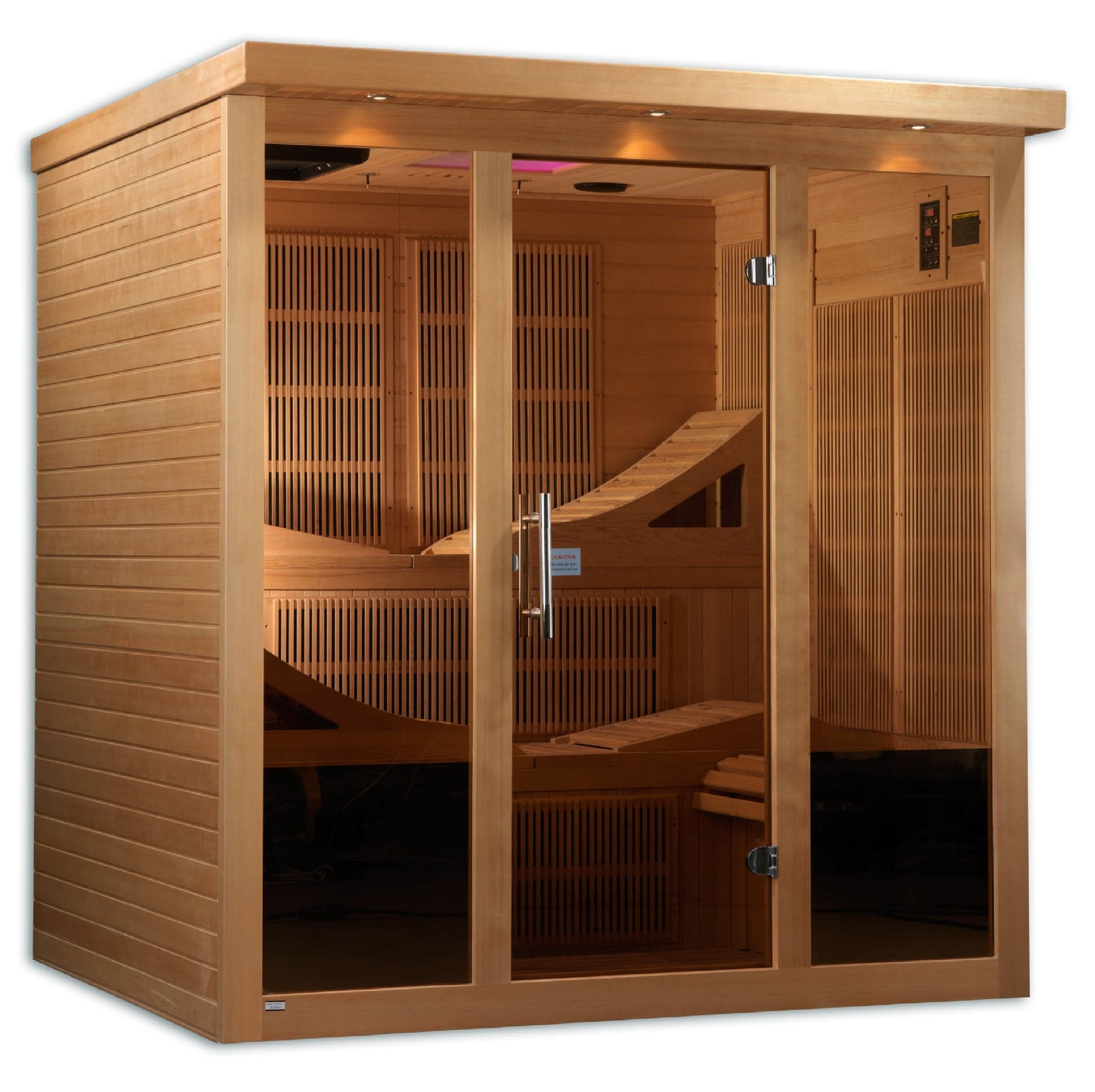
Golden Designs Monaco 6 Person
Spacious 6-person ultra-low-EMF far-infrared sauna in double-paneled Canadian Hemlock.