Home Sauna Installation Guide: What to Expect
Electrical requirements, space planning, ventilation, flooring, and everything else you need to prepare for a home sauna installation.
Electrical Requirements
120V / 15–20A: Most 1–2 person infrared saunas. Standard household outlet. No electrician needed.
240V / 30–60A: Traditional saunas and larger infrared units. Requires a dedicated circuit installed by a licensed electrician. Budget $200–$600 for electrical work.
Space Planning
- Allow 6 inches of clearance on all non-wall-adjacent sides for air circulation
- Ensure the floor can support the sauna weight (300–1,200 lbs depending on model)
- Concrete, tile, and hardwood floors all work well; carpet is not recommended
- Door must swing outward (fire safety requirement)
Ventilation
Indoor saunas need air intake near the floor and exhaust near the ceiling. Most pre-built saunas include ventilation panels. Ensure the room has adequate airflow to prevent moisture buildup in the surrounding space.
Flooring Inside the Sauna
Cedar or teak flooring grates are standard and ideal. Avoid unfinished wood that will absorb sweat. Non-slip surfaces are important for safety.
Outdoor Sauna Installation
For barrel and cabin saunas, you'll need:
- Level, stable foundation (gravel pad, concrete pad, or treated lumber cradles)
- Weatherproofing oil or treatment applied annually
- Outdoor-rated electrical run to the location
- Local building permit in many jurisdictions (check before ordering)
Top-Rated Saunas
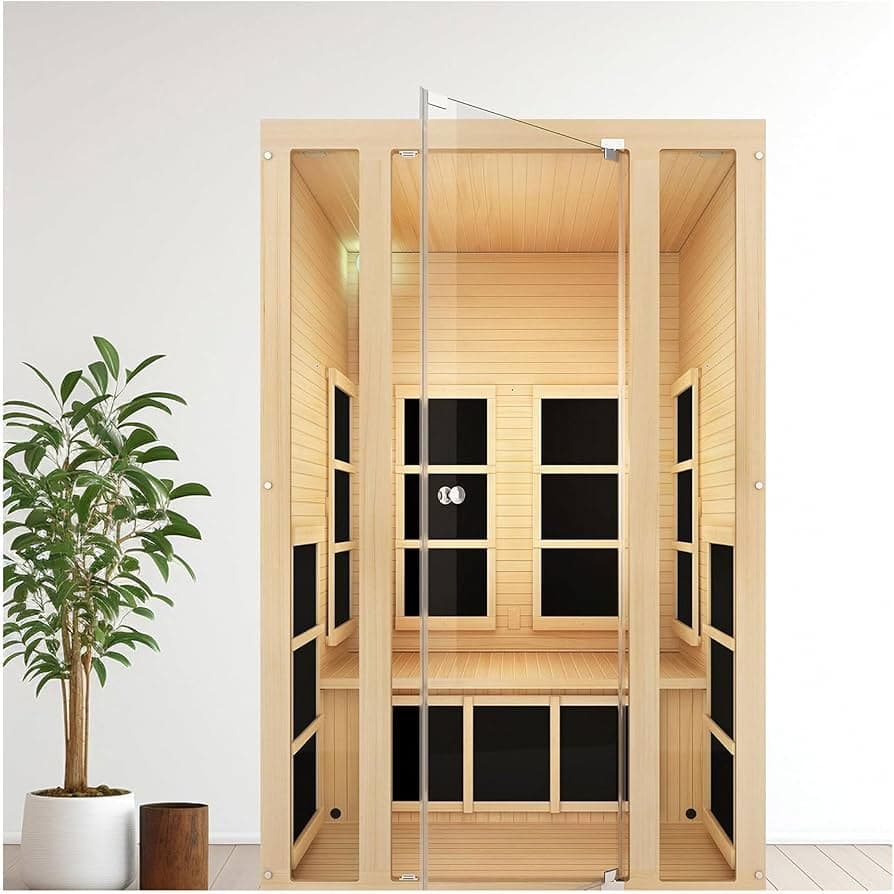
JNH Lifestyles Joyous 2 Person
A best-selling 2-person far-infrared sauna with 7 carbon-fiber heaters in a Canadian Hemlock cabin.
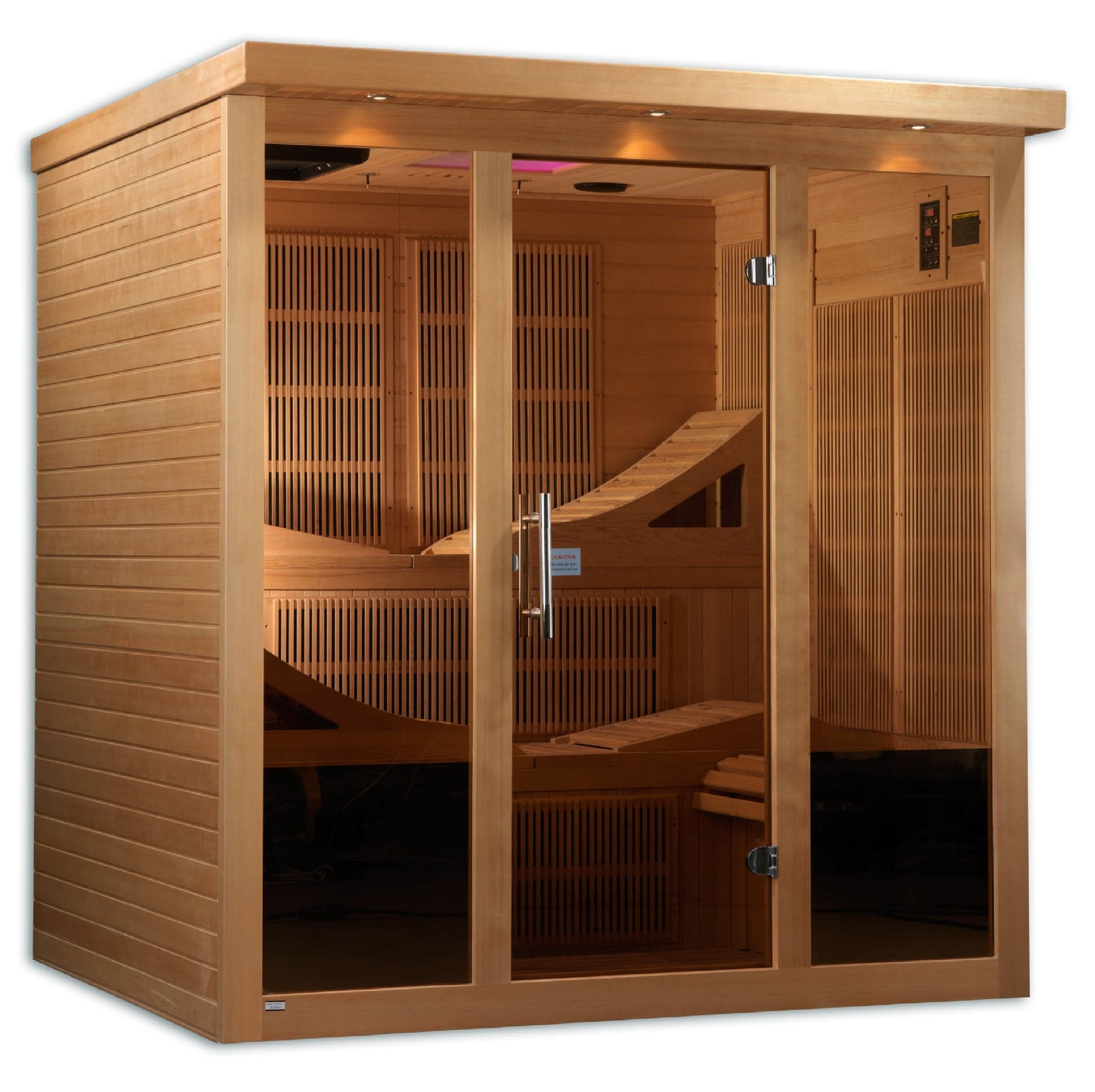
Golden Designs Monaco 6 Person
Spacious 6-person ultra-low-EMF far-infrared sauna in double-paneled Canadian Hemlock.